A clear guide to Indian single malt whisky. How it differs from Scotch, why India's heat matters, and what to expect from Amrut, Paul John, Rampur and Indri.
Twenty years ago, few whisky drinkers outside India could name an Indian single malt. Today, Indian distilleries win international awards and their bottles sit on bar shelves from London to Phoenix.
First, what “Indian whisky” means
India is one of the largest whisky markets in the world, but much of what is sold there as whisky is blended from neutral spirit made from molasses, with some malt whisky added. Outside India, that style often can’t be sold as “whisky” at all.
Indian single malt is different. It is made only from malted barley at a single distillery, in the same way as single malt Scotch. That’s the category this guide is about.
Why India’s climate matters
Whisky gets much of its colour and flavour from years in oak casks. In Scotland’s cool, damp climate, that happens slowly. In the heat of Bengaluru, Goa or Haryana, it happens much faster, and far more of the spirit evaporates each year (distillers call this the angel’s share).
So Indian single malts are usually younger than their Scottish cousins but taste richer than their age suggests: lots of fruit, honey, vanilla and spice.
Four names to know
Amrut (Bengaluru, Karnataka). The pioneer. Amrut’s single malt launched in 2004 and put Indian whisky on the world map. Expect malt, fruit and warm oak.
Paul John (Goa). From John Distilleries, made with Indian six-row barley. Brilliance is the unpeated, honeyed entry point.
Rampur (Uttar Pradesh). From Radico Khaitan, near the foothills of the Himalayas. Double Cask matures in American and European oak; Asava is finished in casks that held Indian Cabernet Sauvignon.
Indri (Haryana). From Piccadily Distilleries, and one of the newest names. Trini is matured in three different types of cask.
How to drink it
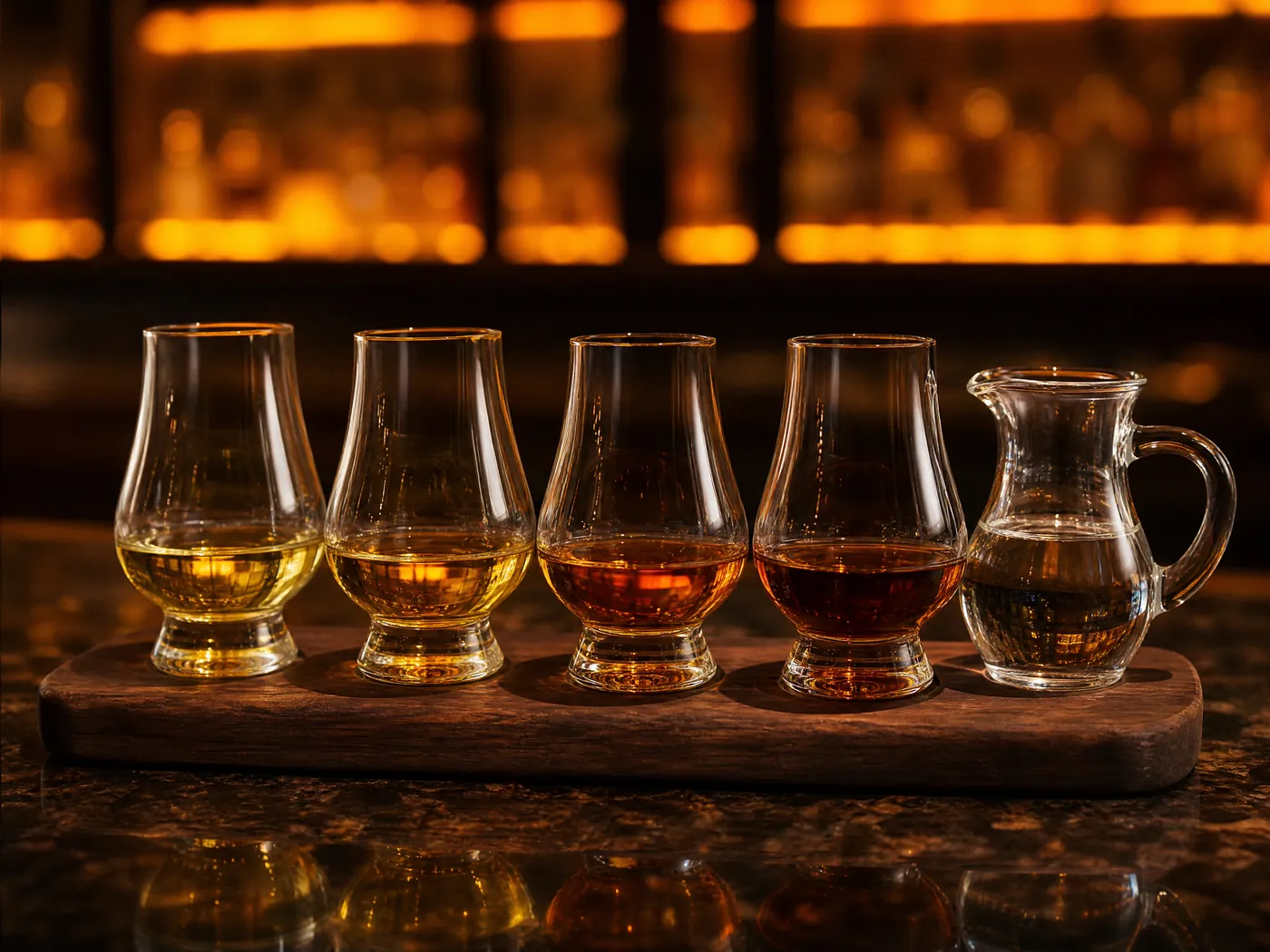
Neat, or with a few drops of water to open it up. A single large ice cube is fine. And yes, a good single malt goes with food: a rounded, honeyed whisky sits well beside a rich goat biryani or a slow-cooked lamb curry.
Tasting it in Chandler
Our bar is building a list of Indian whisky alongside Indian beer. Ask us what we’re pouring, or see the bar.