Indo-Chinese food explained. How Kolkata's Chinese community shaped a cuisine of chilli, soy and garlic, and what to order, from Gobi Manchurian to Hakka noodles.
Ask a room of people who grew up in India about their favourite comfort food and a surprising number will say chilli chicken or Gobi Manchurian. Indo-Chinese food is one of India’s most loved cuisines, and it barely exists in China.
Where it came from
Chinese families, many of them Hakka, began settling in Kolkata in the late 18th century. Over generations they ran tanneries, shoe shops, laundries and restaurants. Their cooking adapted to Indian ingredients and Indian appetites: more chilli, more garlic and ginger, plenty of green onion and soy.
From Kolkata, the food spread across India: to street carts, train stations, wedding buffets and family restaurants. Each city added its own twists.
What to order
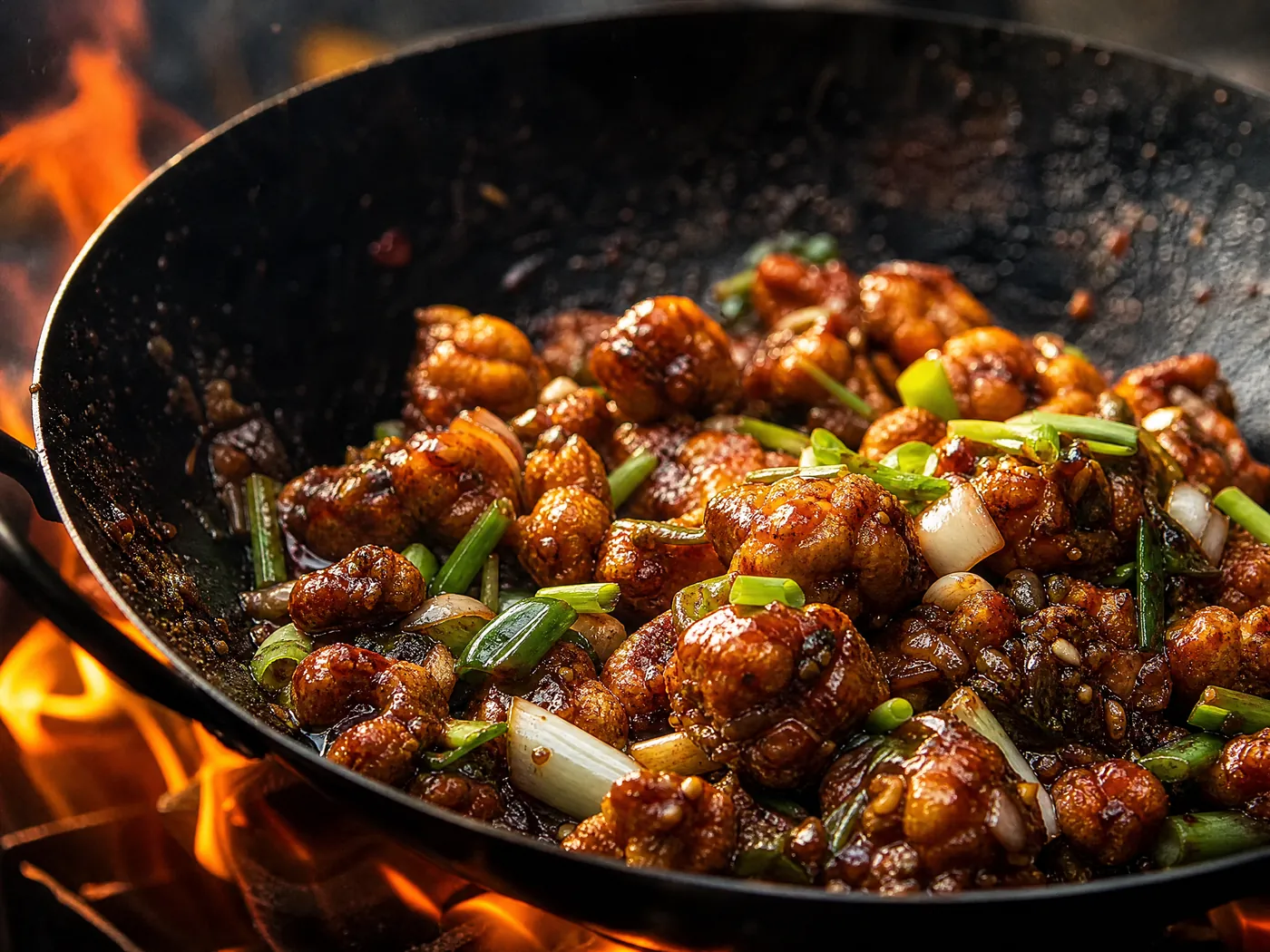
- Manchurian. Fried pieces (cauliflower, chicken, paneer, baby corn) tossed in a glossy soy, garlic and chilli sauce. Dry as a starter, or in gravy with rice.
- Chilli chicken / chilli paneer. Crisp pieces stir-fried with peppers, onions and green chillies.
- Hakka noodles and fried rice. Wok-tossed, smoky and the perfect base for a Manchurian.
- “65” and “555” dishes: South Indian restaurant favourites that sit happily alongside Indo-Chinese on many menus.
Indo-Chinese at Biryani Pot
Our kitchen cooks Gobi Manchurian, chilli chicken, Hakka-style noodles and fried rice, and they disappear fastest when there’s a cold beer on the table. Read the longer story of India’s own Chinese food, or make Gobi Manchurian at home.