
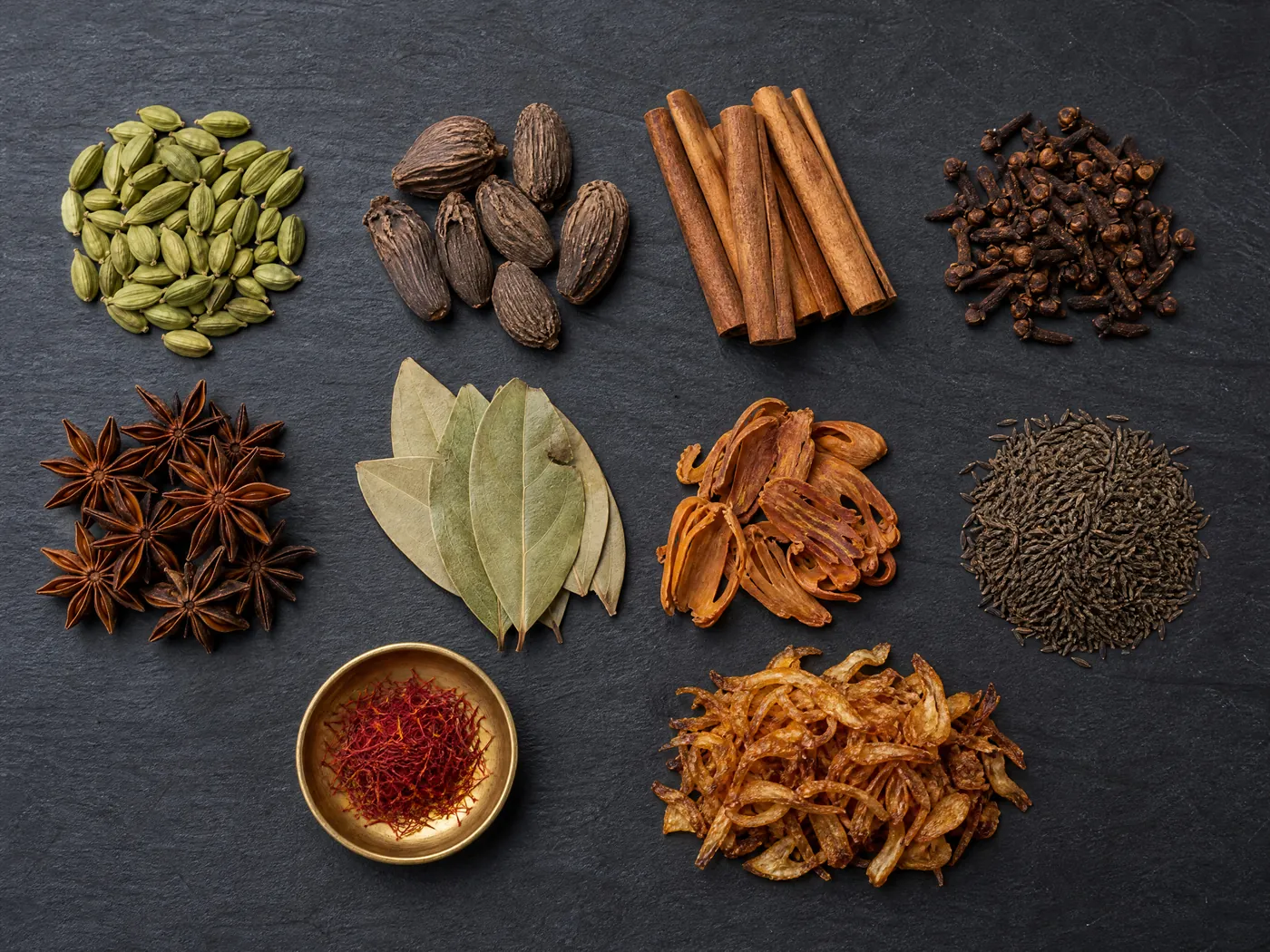
The whole spices, herbs and aromatics in Hyderabadi biryani, from cardamom and shahi jeera to mace, saffron and fried onions, and what each one does.
Open a pot of good biryani and the first thing you notice is the smell: warm, floral, a little smoky. That comes from a handful of spices, each doing a specific job.
In the rice water
Green cardamom. Floral and sweet; the signature scent of biryani.
Cloves. Warm and slightly numbing. Use sparingly.
Cinnamon (or cassia). Sweet warmth.
Bay leaves. Indian bay (tej patta) is milder and more cinnamon-like than the European leaf.
Shahi jeera. “Royal cumin”, or black caraway. Thinner and darker than regular cumin, with a smoky, slightly bitter edge. It is one of the defining notes of Hyderabadi biryani.
In the marinade
Ginger-garlic paste, red chilli powder, turmeric and garam masala go into the yogurt with the meat. Many Hyderabadi cooks also add mace and black cardamom for depth, and green papaya paste to tenderise.
On top
Saffron soaked in warm milk gives the gold streaks through the rice. Fried onions (birista) add sweetness and colour. Mint and coriander keep it fresh. Ghee carries all of it.
Why whole spices?
Whole spices release flavour slowly and gently in the steam of the sealed pot. Ground spices would turn the rice muddy. That is also why you find a cardamom pod or two on your plate: set them aside.
Ready to cook? Try our home recipe for chicken dum biryani.