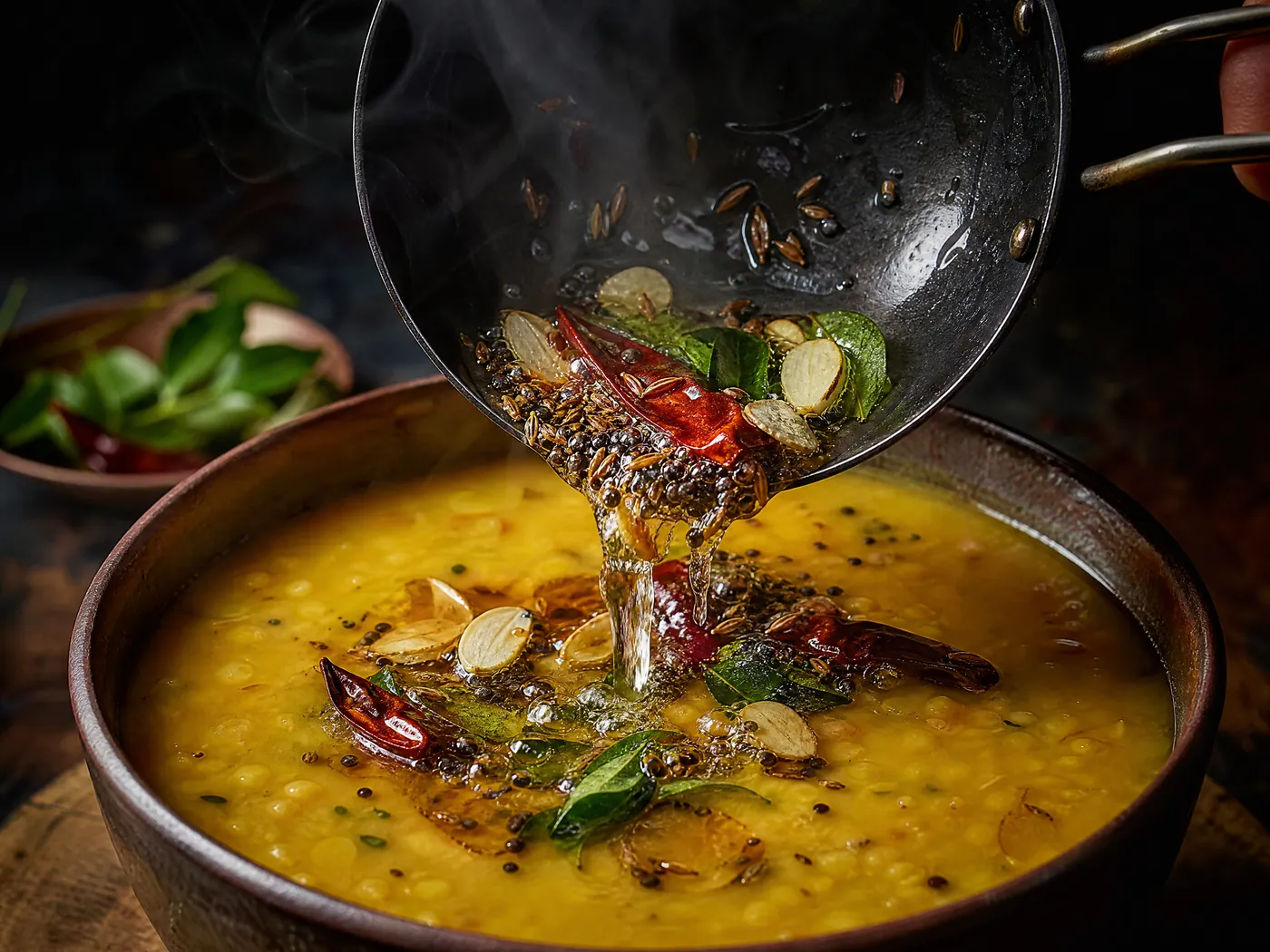
Tadka (tarka, chhaunk) means frying spices in hot fat and pouring them over a dish. How it works, the right order of spices and common mistakes.
If Indian cooking has a secret, this is it. Tadka (also tarka, chhaunk, baghaar; oggarane in Kannada, popu in Telugu) means frying whole spices and aromatics in hot fat for a few seconds, until they release their flavour into it, then pouring the lot over a dish or using it as the base of one.
Fat carries flavour. Many spice compounds dissolve in fat, not water, so a spoonful of spiced ghee spreads more flavour through a pot of dal than any amount of ground spice stirred in.
The order matters
Spices cook at different speeds. Add them from slowest to fastest:
- Mustard seeds first. Wait until they pop.
- Cumin, fenugreek and nigella: a few seconds.
- Dried red chillies and garlic: until garlic is pale gold.
- Curry leaves last. They crackle instantly.
- Asafoetida (hing) and ground spices like chilli powder: just a pinch, off the heat.
Two ways to use it
- At the start, as a base for a curry: spices first, then onions, then the rest.
- At the end, poured over a finished dish: dal, raita, chutneys, pachadi.
Common mistakes
- Fat not hot enough. Mustard seeds should pop within seconds.
- Burnt garlic or fenugreek. Both turn bitter. Pull the pan off the heat early; it keeps cooking.
- Wet curry leaves. They spit violently. Pat them dry.
See tadka in action in our dal tadka and gongura pachadi recipes.