
Biryani is cooked all over South Asia, but Hyderabad's version is the one our kitchen is built around. Here is what makes it different, and how to eat it.
What “dum” means
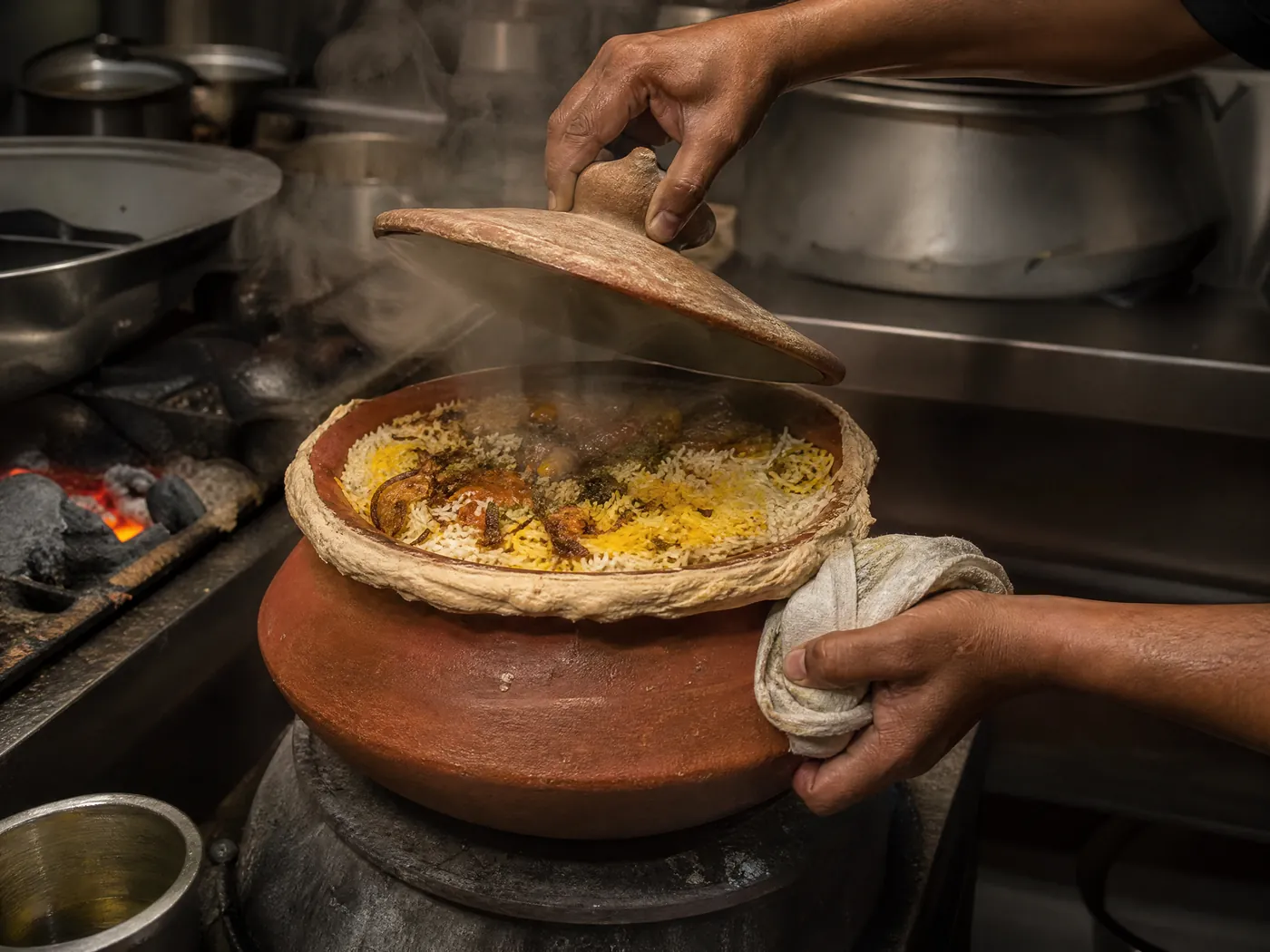
Dum is slow cooking in a sealed pot. The rice and the meat or vegetables are layered, the lid is closed (traditionally sealed with a rope of dough), and the pot finishes over gentle heat. Steam stays inside, so the rice takes on the aroma of the spices, saffron and fried onions beneath it.
The technique is shared with other South Asian kitchens, and Lucknow's cooks are famous for it too. Hyderabad, now the capital of Telangana, made it the signature of its biryani.
Kacchi and pakki
Hyderabadi cooks talk about two styles. In kacchi biryani, raw marinated meat goes into the pot under part-cooked rice, and both cook together on dum. In pakki biryani, the meat is cooked first and layered afterwards. Kacchi is the style most associated with Hyderabad and the harder one to get right. Ask us how today's pot was made.
The rice should be long, separate and fragrant, with streaks of saffron and pockets of masala.
Why it comes with salan and raita
Every biryani on our menu is served with mirchi ka salan, a Hyderabadi curry of green chillies in a peanut, sesame and tamarind gravy, and raita, cool seasoned yogurt. Spoon a little of each over the rice as you go. The salan adds tang and gentle heat; the raita calms it down.
Where to start
Chicken dum biryani is the classic. Goat is deeper and richer. The vegetable biryani shows off the rice and spice on their own. Once you know the style, try the Andhra twist: gongura chicken dum biryani, sharp with sour leaves.